Seminar on Access to Public Toilets as a Determinant of Women's Workforce Participation
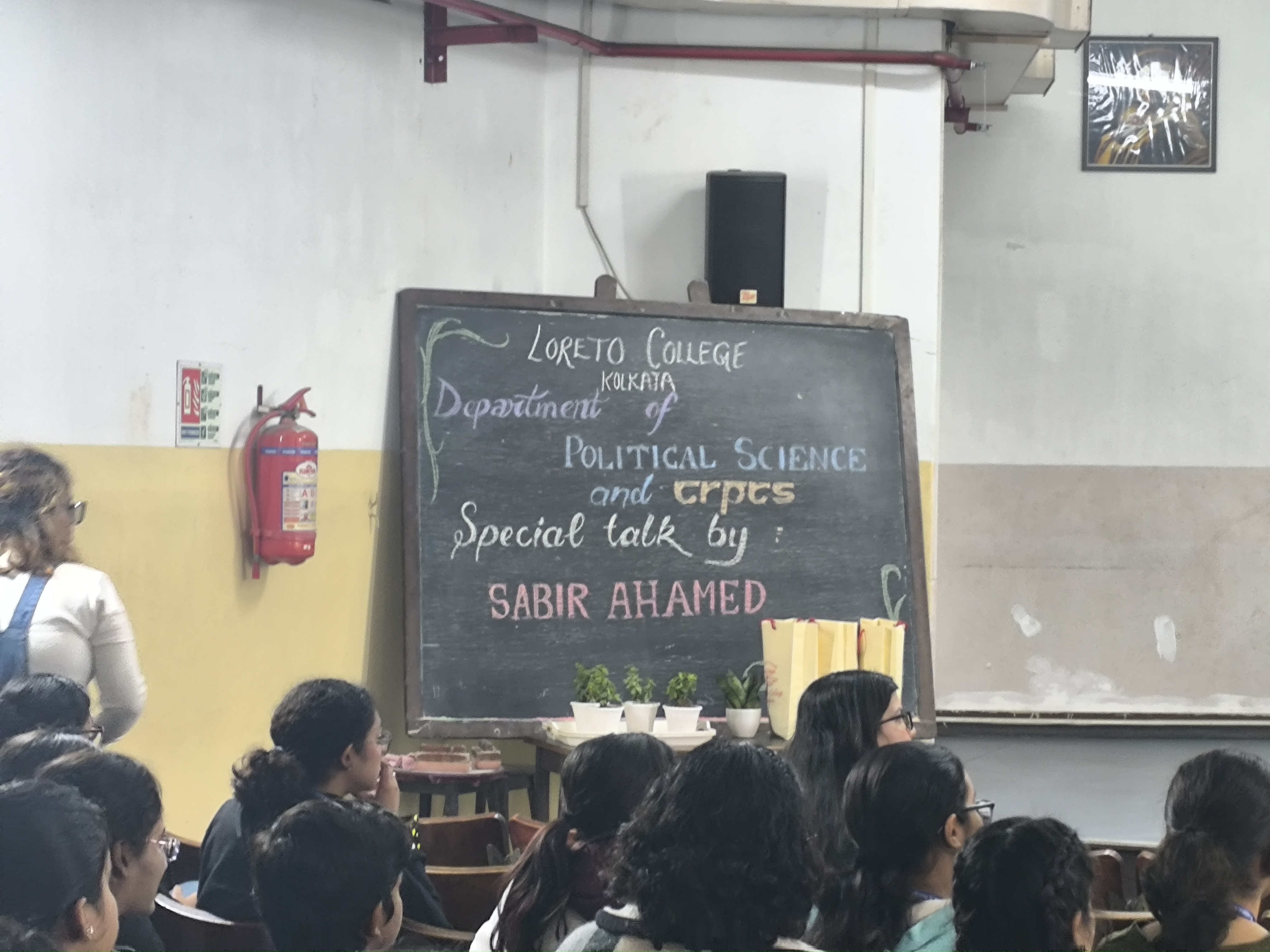
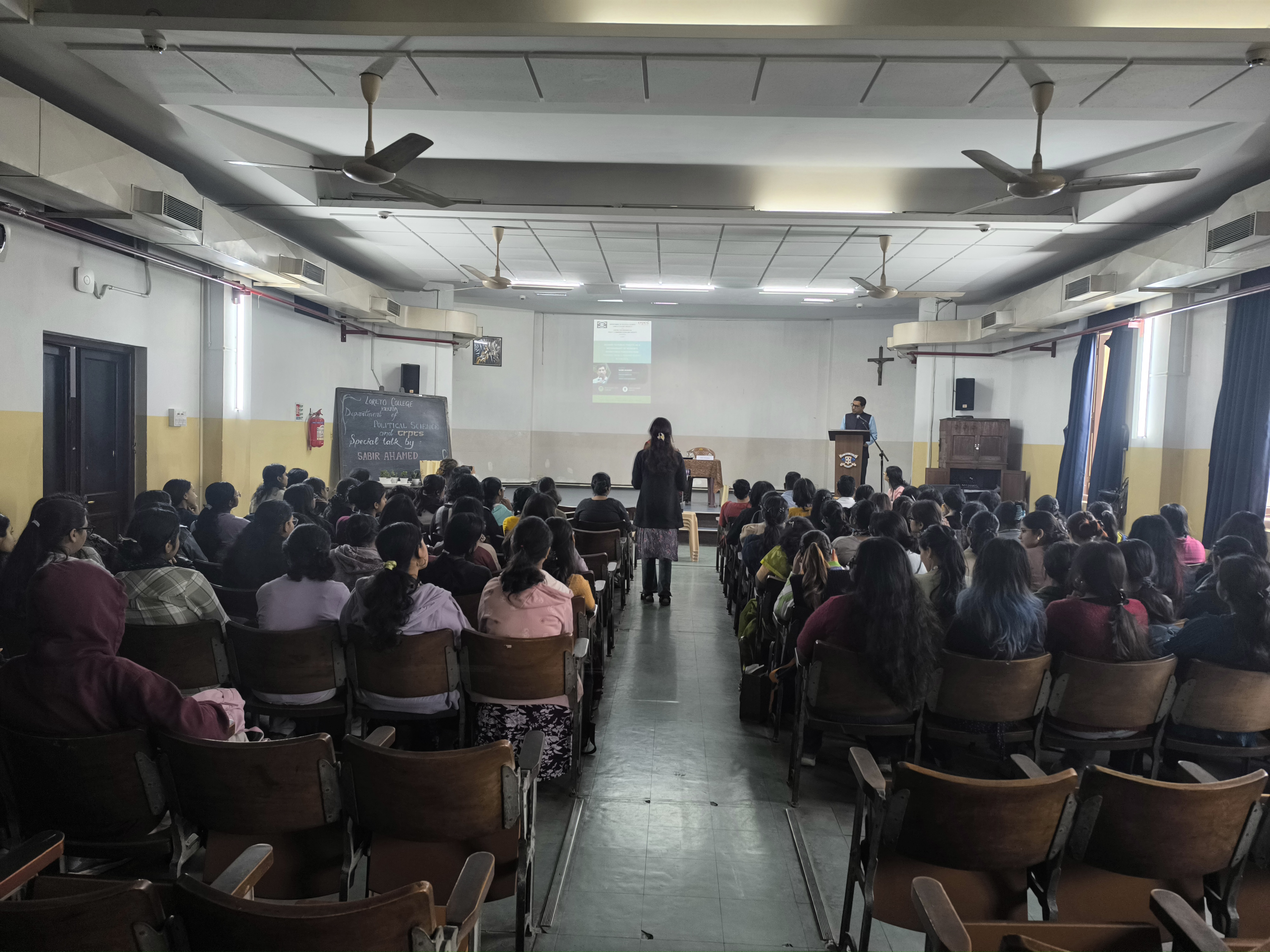
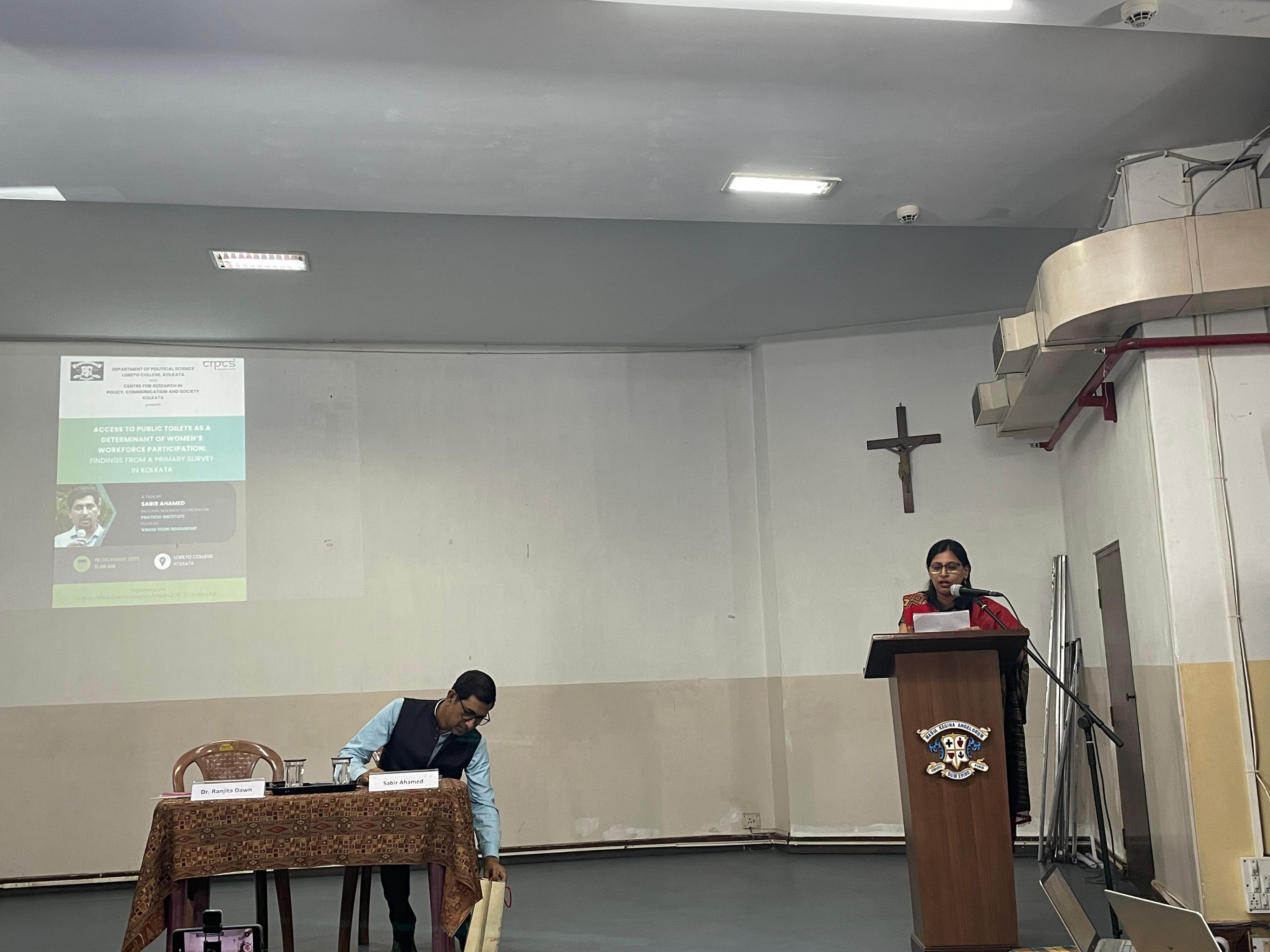
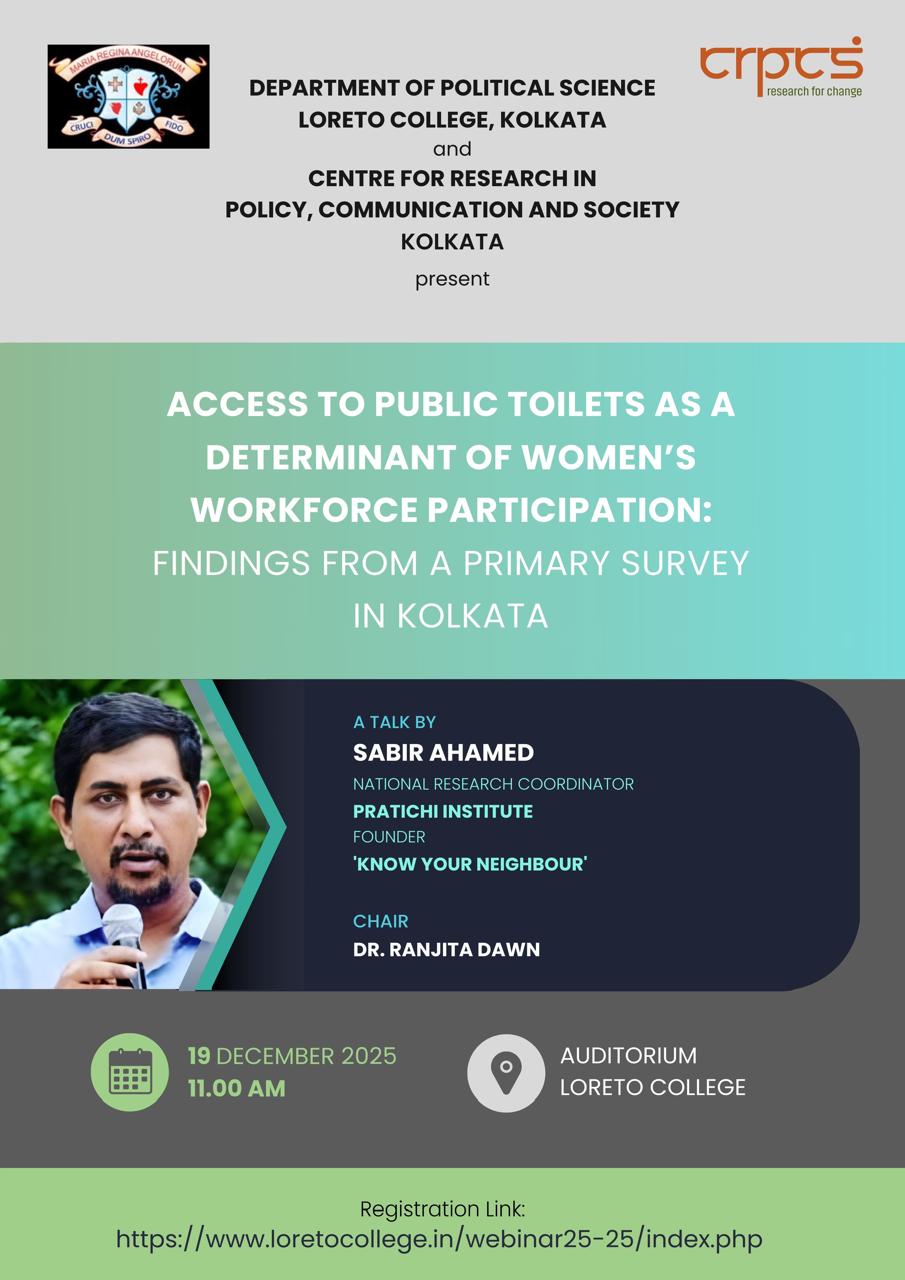
The Department of Political Science, Loreto College, Kolkata, in collaboration with the Centre for Research in Policy, Communication and Society (CRPCS), Kolkata, organized a seminar titled "Access to Public Toilets as a Determinant of Women's Workforce Participation: Findings from a Primary Survey in Kolkata" on 19 December 2025 at 11:00 a.m.
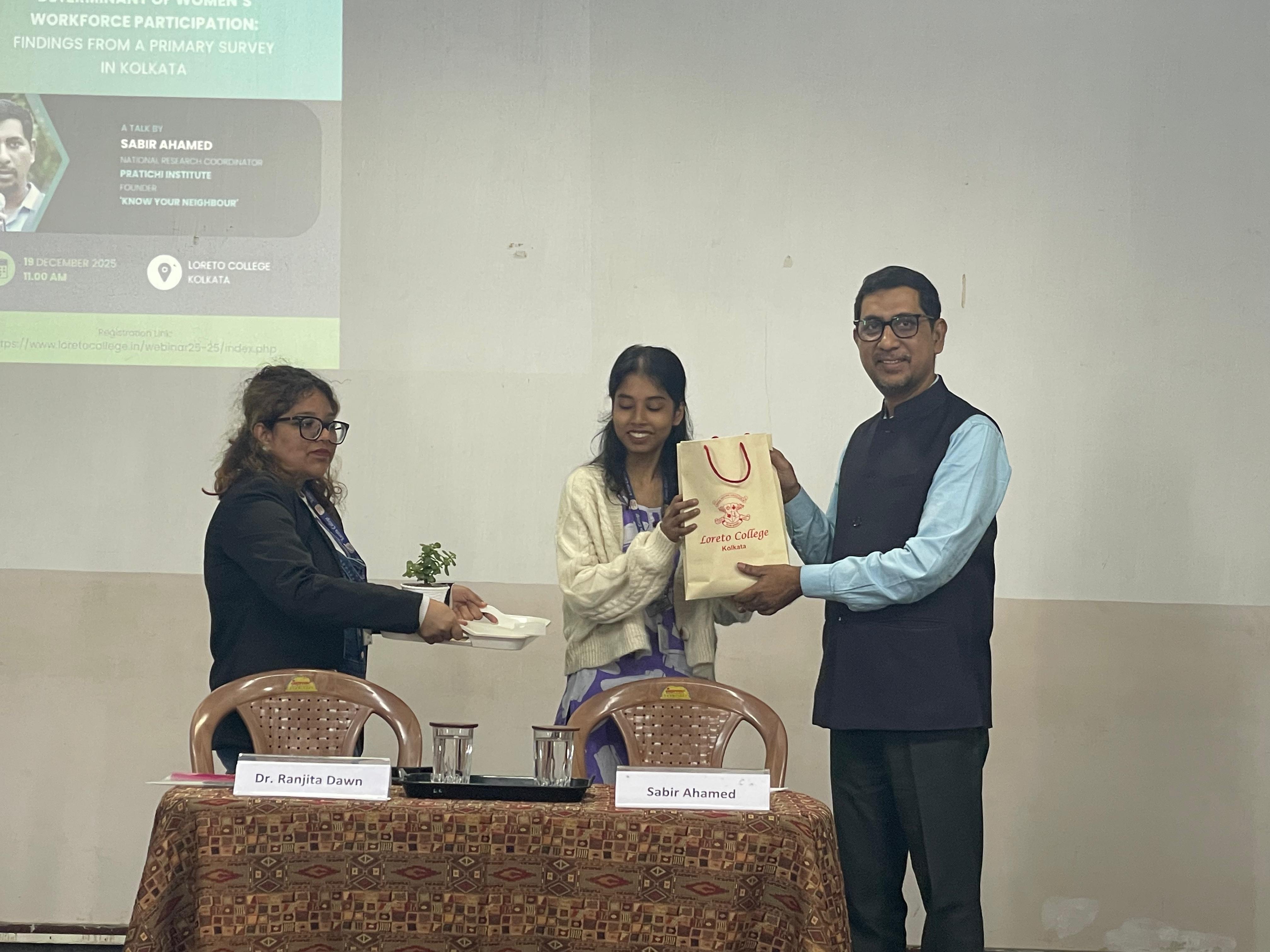
The seminar was delivered by Mr. Sabir Ahamed, National Research Coordinator at the Pratichi Institute and Founder of Know Your Neighbour. The session was moderated by Dr. Ranjita Dawn, whose insightful interventions and academic guidance helped structure the discussion and ensured meaningful engagement throughout the programme.
The lecture addressed a frequently overlooked yet critical determinant of women's economic participation-access to safe, functional, and affordable public sanitation facilities. Drawing on findings from an extensive primary survey conducted across various parts of Kolkata, Mr. Ahamed highlighted how inadequate access to public toilets severely restricts women's mobility, compromises health and safety, and limits participation in paid work, particularly within the informal sector.
Mr. Ahamed elaborated on the research methodology, describing the study as one of the most comprehensive surveys undertaken on public toilet access in the city. He emphasized the gendered nature of urban infrastructure and underscored the broader policy relevance and advocacy potential of the research in informing inclusive urban planning and governance.
The seminar concluded with an interactive question-and-answer session, during which students actively engaged with the speaker by raising pertinent questions and sharing reflections on issues of urban governance, gender-sensitive infrastructure, and the role of empirical research in shaping public policy.
Overall, the seminar offered valuable insights into the intersection of gender, public infrastructure, and workforce participation. It also encouraged students to view research as a powerful tool for social change and civic engagement. The programme successfully fostered academic dialogue and heightened awareness on an issue of significant contemporary relevance.




 ANNOUNCEMENTS