Report on Educational Visit to Dupleix Palace, Chandannagar
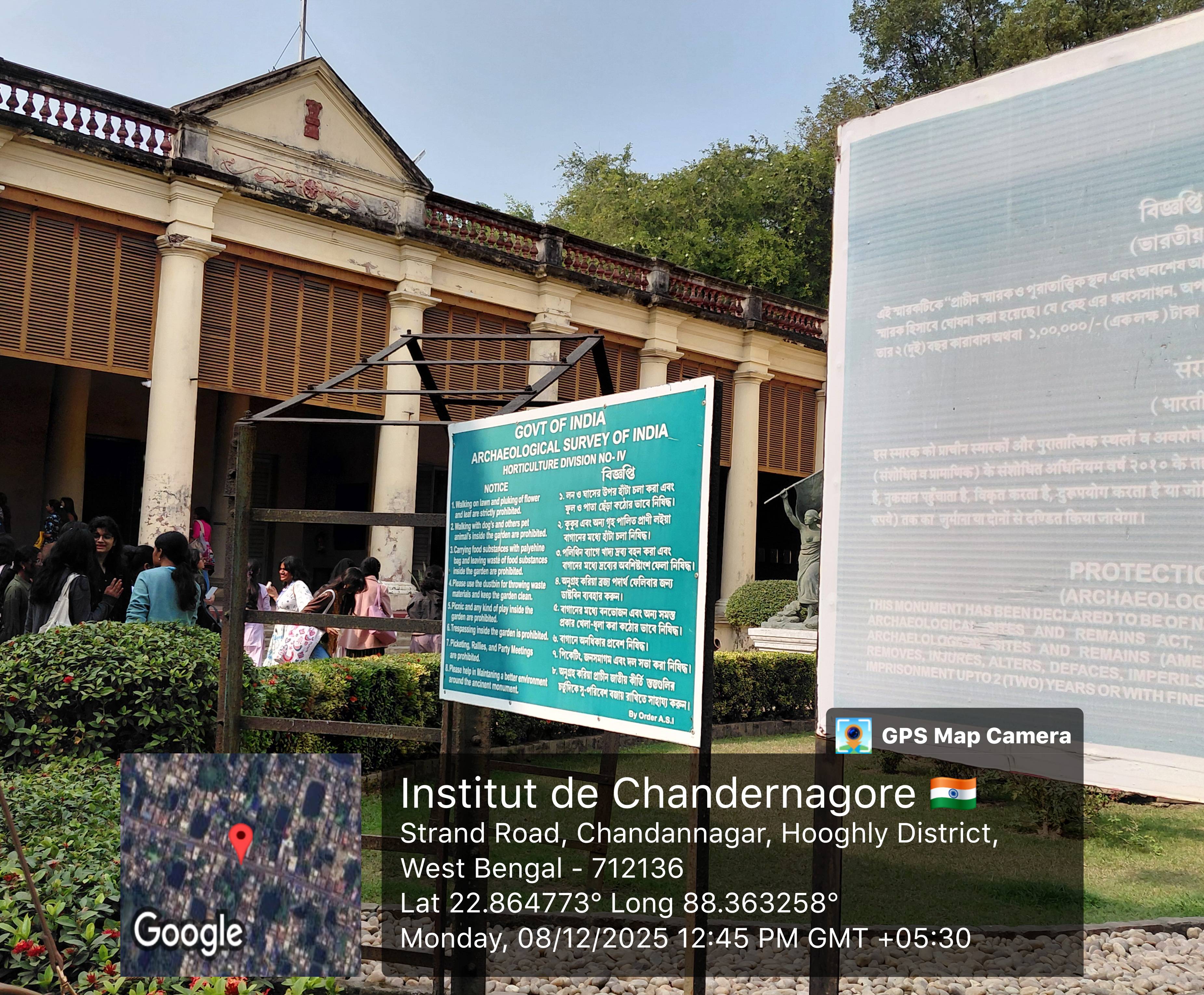
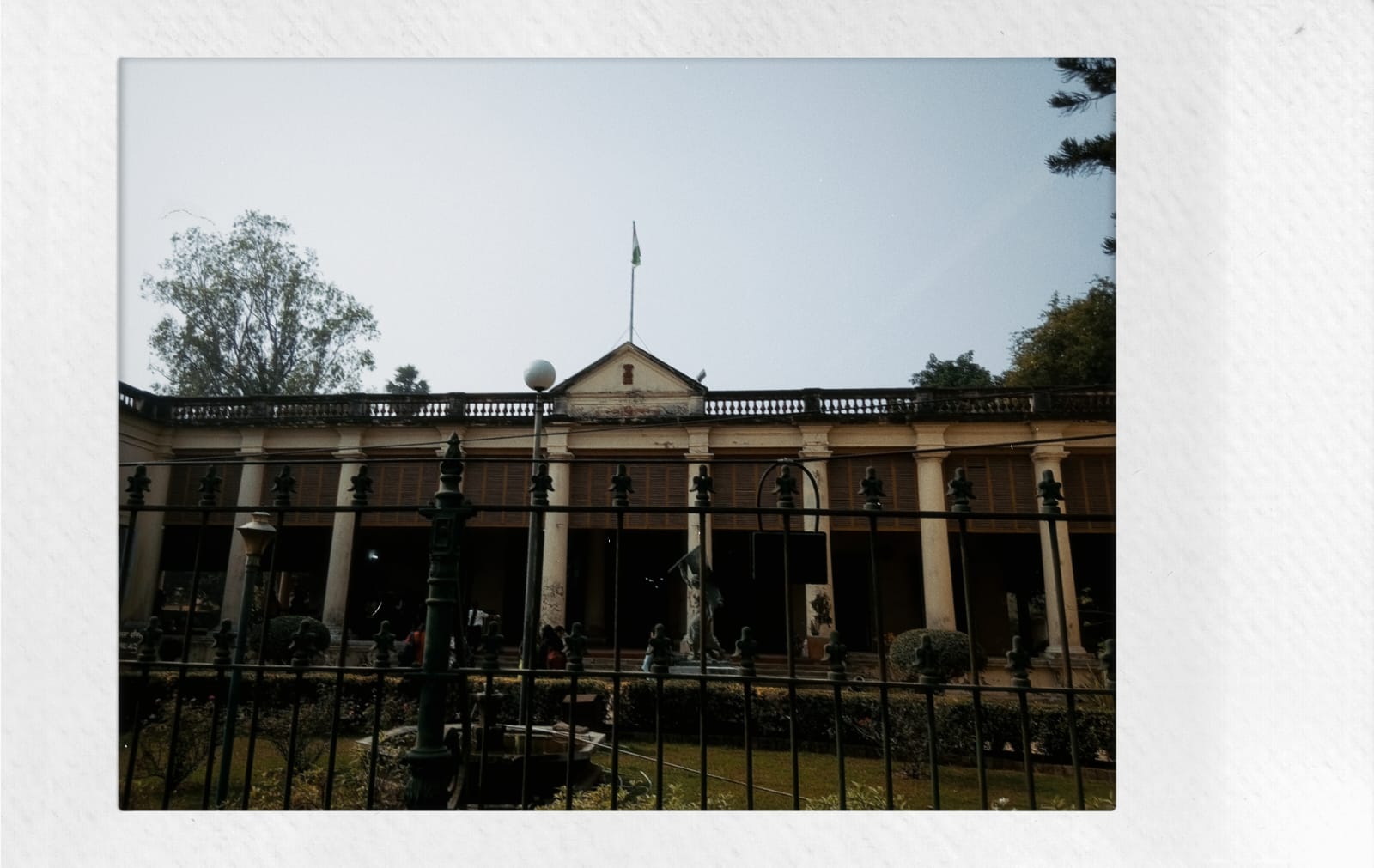
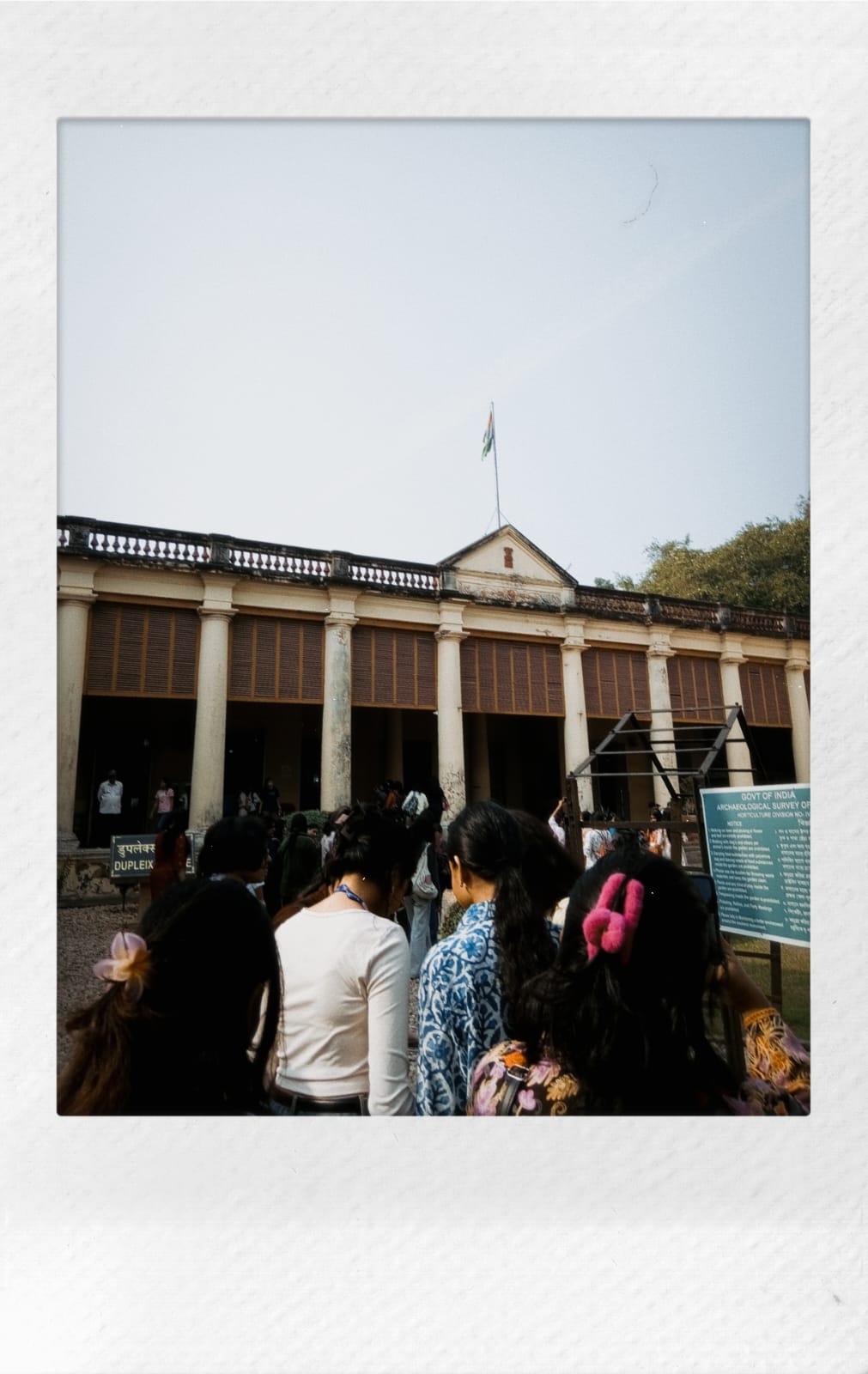
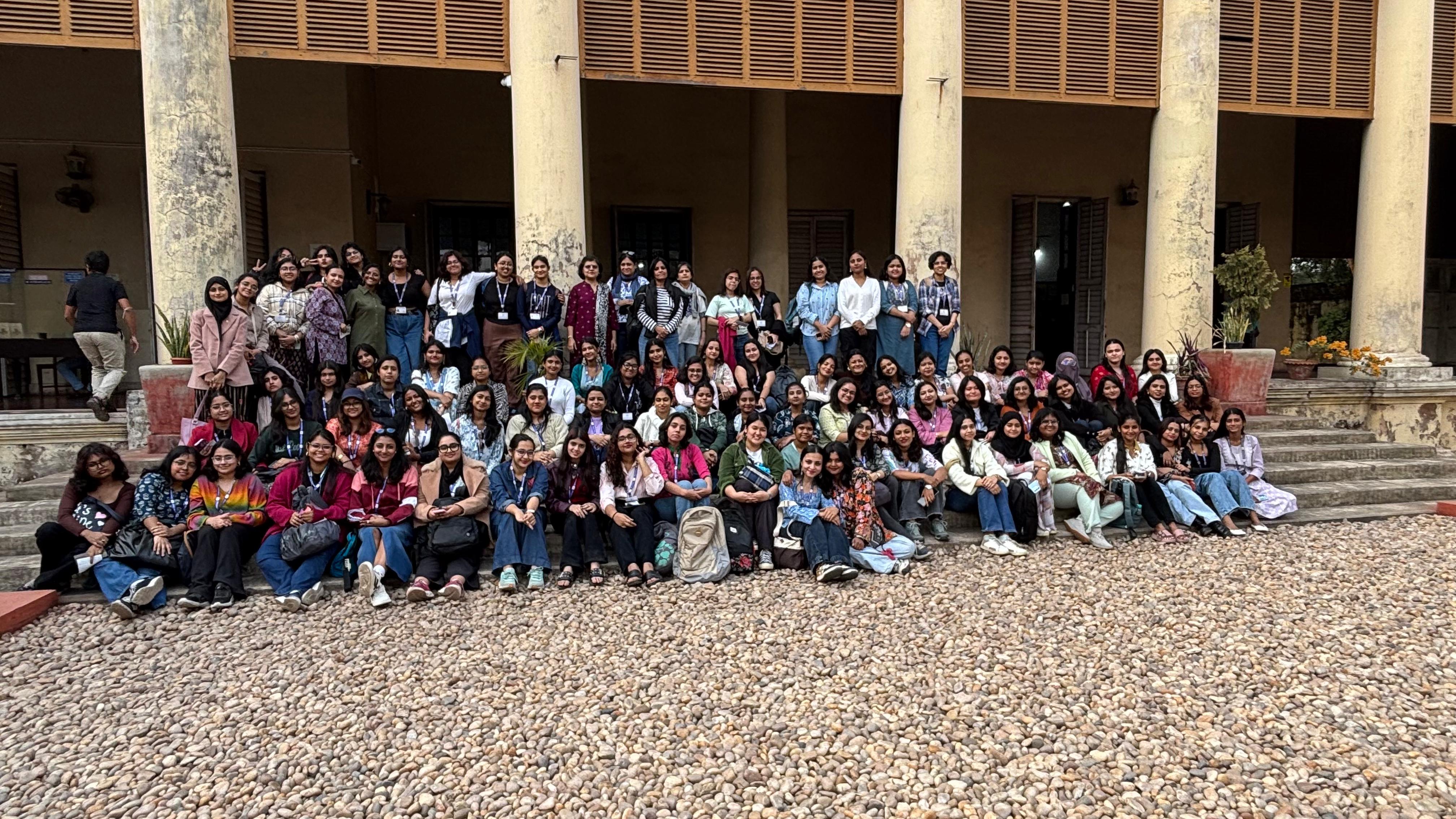
On 8 December 2025, the students of the History Department undertook an educational visit to the Dupleix Palace Museum in Chandannagar as part of our academic engagement with colonial and modern Indian history. The visit provided valuable insights into Chandannagar's unique Indo-French past, its role in global trade networks, the freedom movement, and its cultural heritage.
At the entrance of the museum, visitors are introduced to a concise yet informative display listing the French Director Generals and administrators who played significant roles in shaping Chandannagar's colonial history. Beginning with Dupleix, the first French trader to arrive in 1673, the display includes figures such as Boureau Deslandes, Debendranath Dash, and Tincourie Mukhopadhyay. This panel effectively highlights the nature of Indo-French administrative collaboration and sets the historical context for the exhibits within the palace.
Room 1 presents a comprehensive account of Chandannagar's maritime, military, and colonial history through maps, visual panels, and archival materials. Photographs of French soldiers from Chandannagar who participated in the First World War, along with images of Dupleix's personal security, illustrate the town's military associations. Early maps showing the south gate of French Chandannagar and the port of Marseille in the seventeenth century establish the strong maritime links between Bengal and France. Exhibits such as the plan of flourishing French Chandannagar, charts from the Great Age of European Exploration, and references to Vasco da Gama's sea route place the town within the broader framework of global trade and exploration.
The room also highlights the prosperity of Bengal through panels on the royal port of Saptagram, the evolution of the name Hooghly from the Portuguese term "Hoghla", and the extensive export of commodities such as rice, oil, sugar, salt, butter, and textiles by European trading companies. Architectural drawings, including the plinth plan of the French Naval Storage building, charts of various East India Companies, topographical maps of the Hugli and Saraswati rivers, and portraits of figures like René Madec and Claude Martin enrich the narrative. The documentation of the changing course of the Damodar River, early plans of Calcutta and Fort William, and information on the foundation of Calcutta in 1690 alongside the French settlement of Chandannagar further illustrate the layered colonial history of the region.
Room 2 focuses on Chandannagar's contribution to India's freedom movement and its political developments in the early twentieth century. Photographs of Indian freedom fighters reflect the local participation in the national struggle. A preserved copy of Dhumketu, the influential weekly journal, highlights the spread of revolutionary ideas and patriotic thought. An article on the first communist movement in Chandernagore sheds light on the town's engagement with emerging political ideologies. The section dedicated to Kantilal Das, including his preserved spectacles, and information on the Bishwa Bangiya Sahitya Sammelan inaugurated by Rabindranath Tagore, underscores Chandannagar's cultural and literary significance. Archival materials such as The Chandannagar Gazette and the Report of the Commission of Enquiry on Chandernagore provide valuable insights into administrative reforms and political debates. A particularly significant exhibit is the photograph dated 27 November 1947, capturing the historic declaration of Chandannagar as the "Free City of Chandernagore" by Mr. Bazin.
Room 3 offers a vivid portrayal of Chandannagar's artistic heritage and cultural exchange. The section on the Art School of Chandannagar showcases works by local artists trained under European influence, displayed alongside paintings by French artists. This arrangement reflects the creative dialogue between Western realism and indigenous artistic traditions. The room also features an impressive collection of copper and silver coins, including rare French coins, emphasizing Chandannagar's importance as a colonial centre of trade and administration. Displays on traditional craftsmanship, particularly the lost-wax metal casting technique or giredue casting, include finely crafted ritual figures such as an owl, elephant, and camel. These objects demonstrate the skill of regional artisans and the continuity of traditional practices across generations.
In conclusion, the Dupleix Palace Museum offers a well-organised and enriching exhibition that effectively presents Chandannagar's multifaceted history. The students found the visit academically stimulating and informative. However, certain improvements could further enhance the visitor experience. More detailed captions for complex maps and architectural plans would aid interpretation, while interactive digital displays or audio guides could make the exhibits more engaging. Improved lighting in some sections and multilingual descriptions, particularly in Bengali and English, would also increase accessibility. Overall, the Dupleix Palace remains a valuable cultural and educational institution, and with these enhancements, it can further strengthen its role as a centre for historical learning.




 ANNOUNCEMENTS