One Day National Conference and Annual Students' Summit, ECOLORE XII
The Department of Economics, Loreto College, Kolkata, organized a One-Day National Conference and Annual Students' Summit, ECOLORE-XII on November 19, 2025 as a mark of the rich academic heritage the college upholds over the decades. Keeping with one of the most emergent issues of the contemporary discourse and debate, at a time when the world is at a crucial juncture driven by the unprecedented technological wave led by artificial intelligence, inter alia, the theme of the conference was set as "Reimagining Intellectual Property Rights: Challenges, Prospects and Emerging Perspectives." The programme witnessed resounding participation of faculty, research scholars as well as students from various colleges and universities in Kolkata and from outside West Bengal.
The programme began with a short note of introduction by the convener, Dr. Mainak Bhattacharjee, Head, Department of Economics, followed by the welcome address by Teacher-in-charge Sr.(Dr.) A. Nirmala. The keynote address was delivered by Dr. R. Neethu Rajam, Associate Professor at the Faculty of Law, National Law University, Delhi. In her address Dr. Rajam highlighted how humanity's profound impact on the planet, captured in the concept of the Anthropocene, has reshaped global conversations around crisis, innovation, and responsibility. Dr. Rajam argued that while the pandemic revealed deep flaws in existing models of innovation, it also catalyzed transformative forces, reshaping discourses on pandemic preparedness, redefinition of innovation frameworks, and growing global demand for equity and inclusion. Besides, she proposed a re-envisioning of intellectual property systems that goes beyond economic incentives to embed fundamental values, address structural incompatibilities, and contribute meaningfully to global equity in line with SDG 9 and further outlined the three critical pillars for the future of intellectual property: flexibility and resilience, a sustainability-centred approach that incorporates social justice, and a decentering of human-centric models of creativity to accommodate broader, more inclusive forms of innovation.
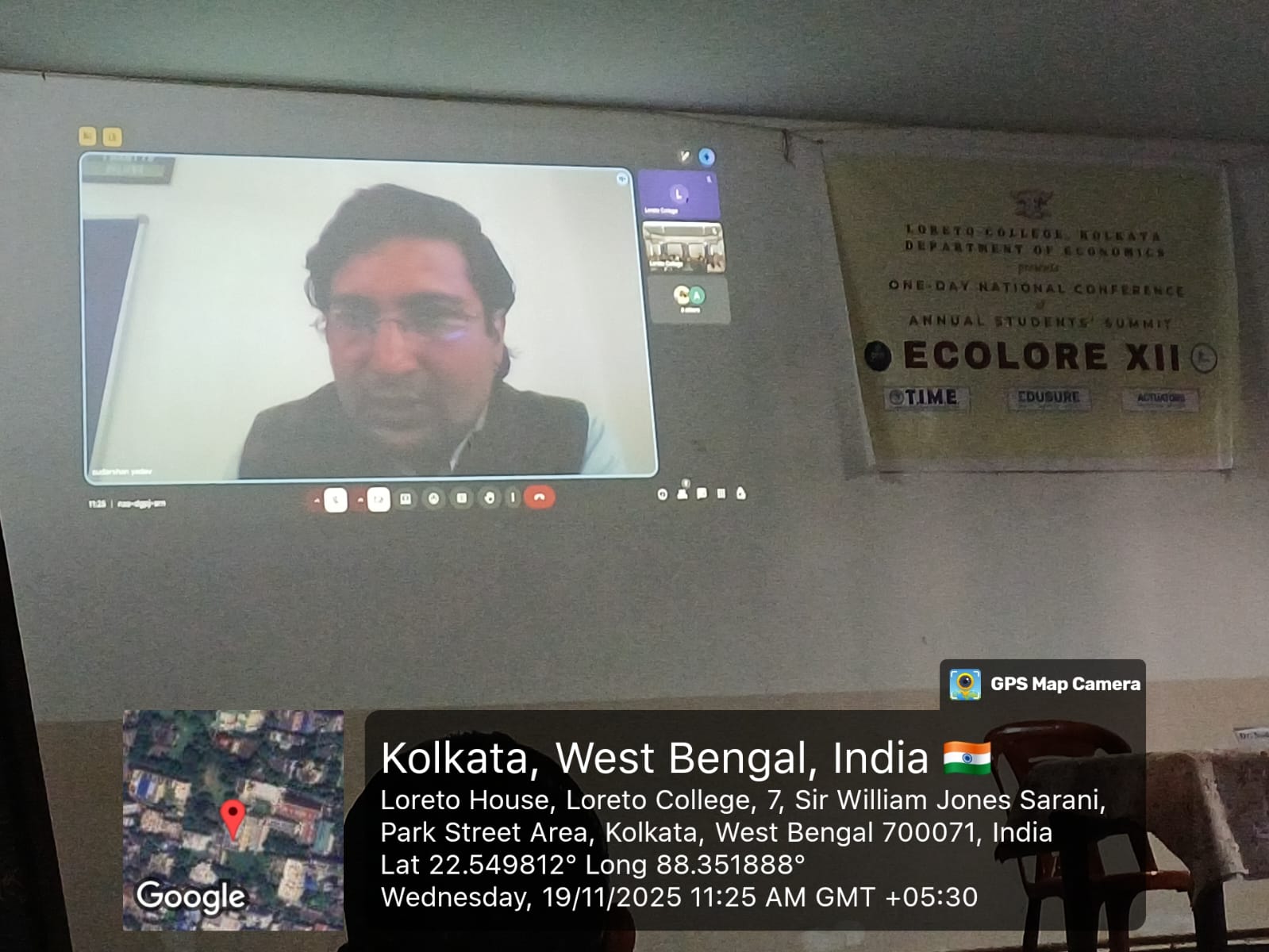
Following the keynote speech, in the special lecture session, Dr. Sudarshan Yadav, Assistant Professor, Central University of Jharkhand, explored the role of media and communication technologies in the post-pandemic information ecosystem. He discussed the explosion of digital content, the rise of automated news production, and the ethical dilemmas posed by deepfakes, misinformation, and algorithm-driven content creation. According to him, the media sector now operates in a landscape where originality is constantly challenged, prompting new conversations about copyright, licensing, and fair use.
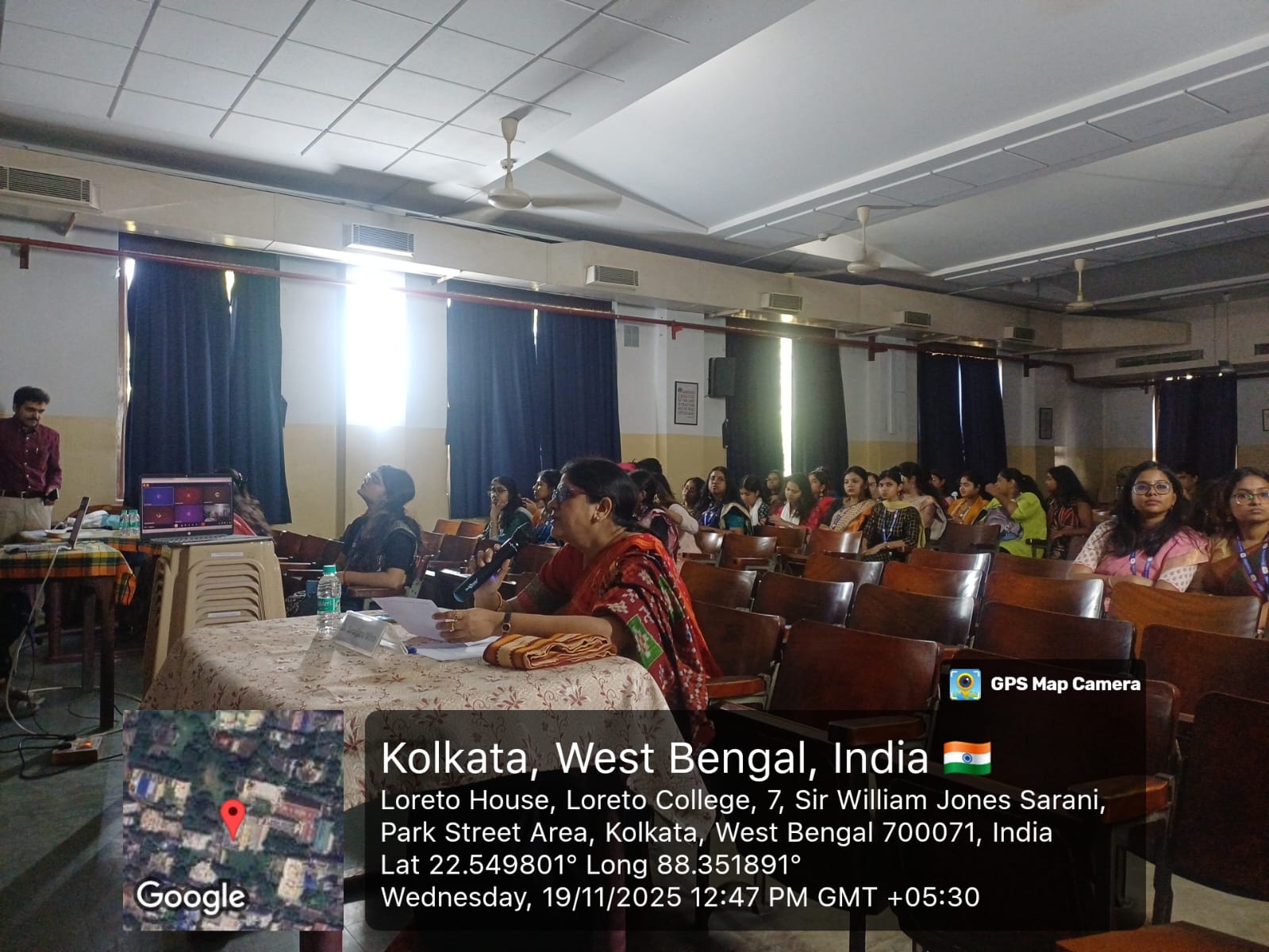
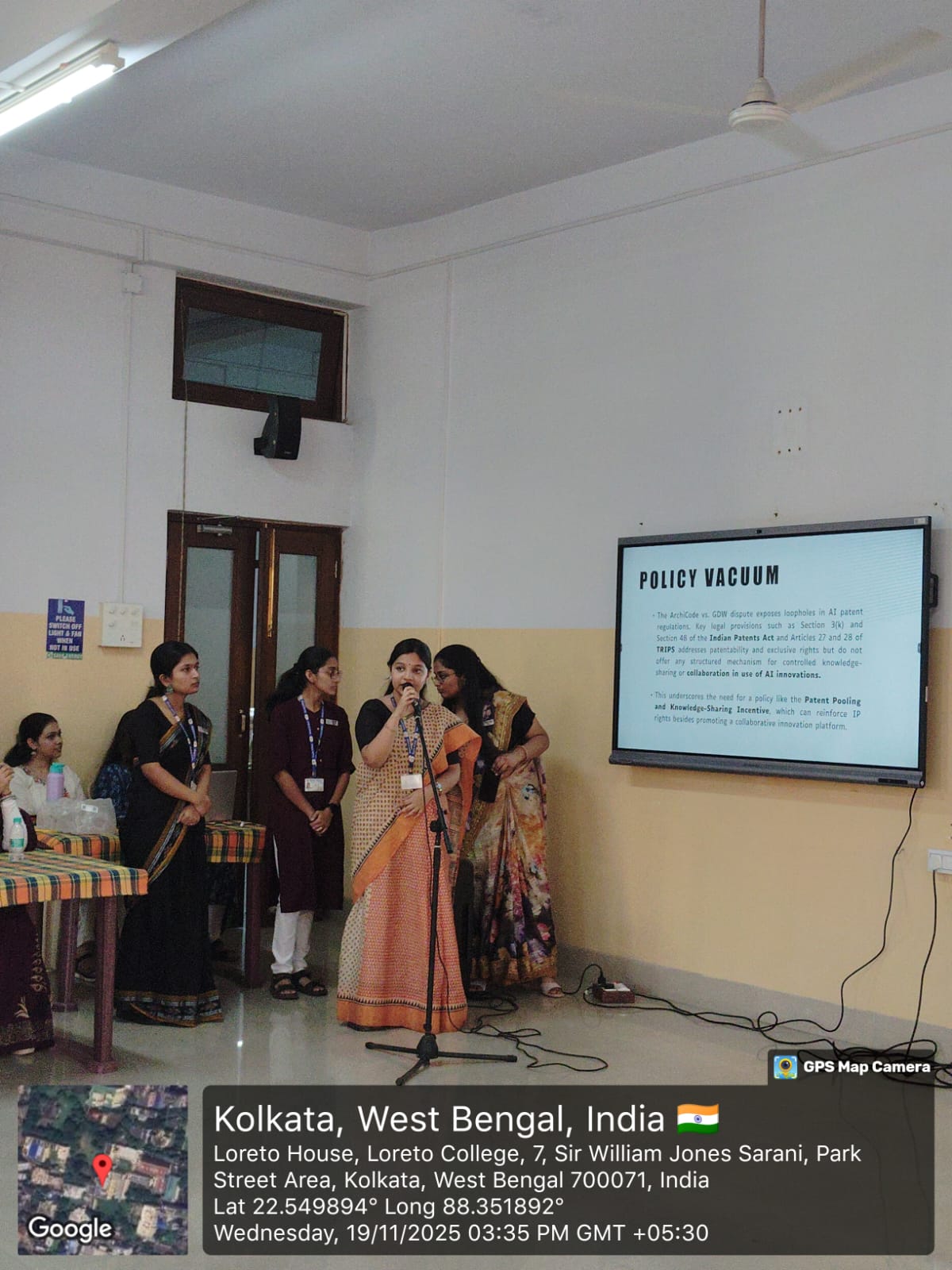
The academic tone of the day continued with the technical session chaired by Dr. Suranjana Mitra, Associate Professor in the Department of Economics at Loreto College. Deservingly a special mention, inter alia, was the paper, presented by the third-year students of the department, namely, Vanshika Agarwal, Deetya Roy, and Prapti Bhattacharyya, which analysed the evolving nature of intellectual property law in the age of artificial intelligence, focusing on the legal and economic implications of AI's growing role in content creation. The session encouraged rich academic discussion, highlighting the interdisciplinary nature of IPR and technological change. The morning session of the programme was drawn to its close with the formal vote of thanks, proposed by Mr. Nilavo Roy, a faculty member of the department and the joint convener of the aforesaid conference.
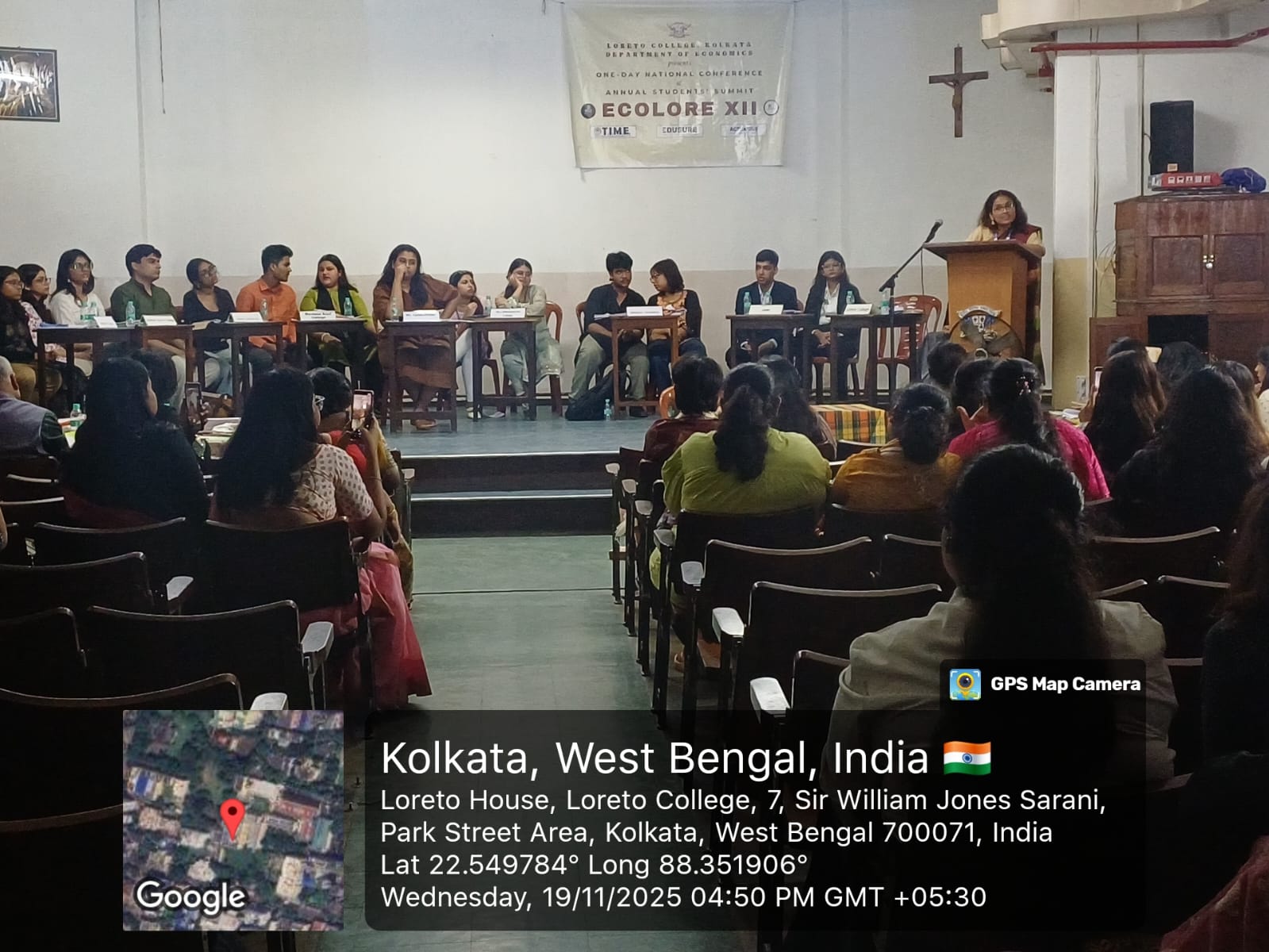
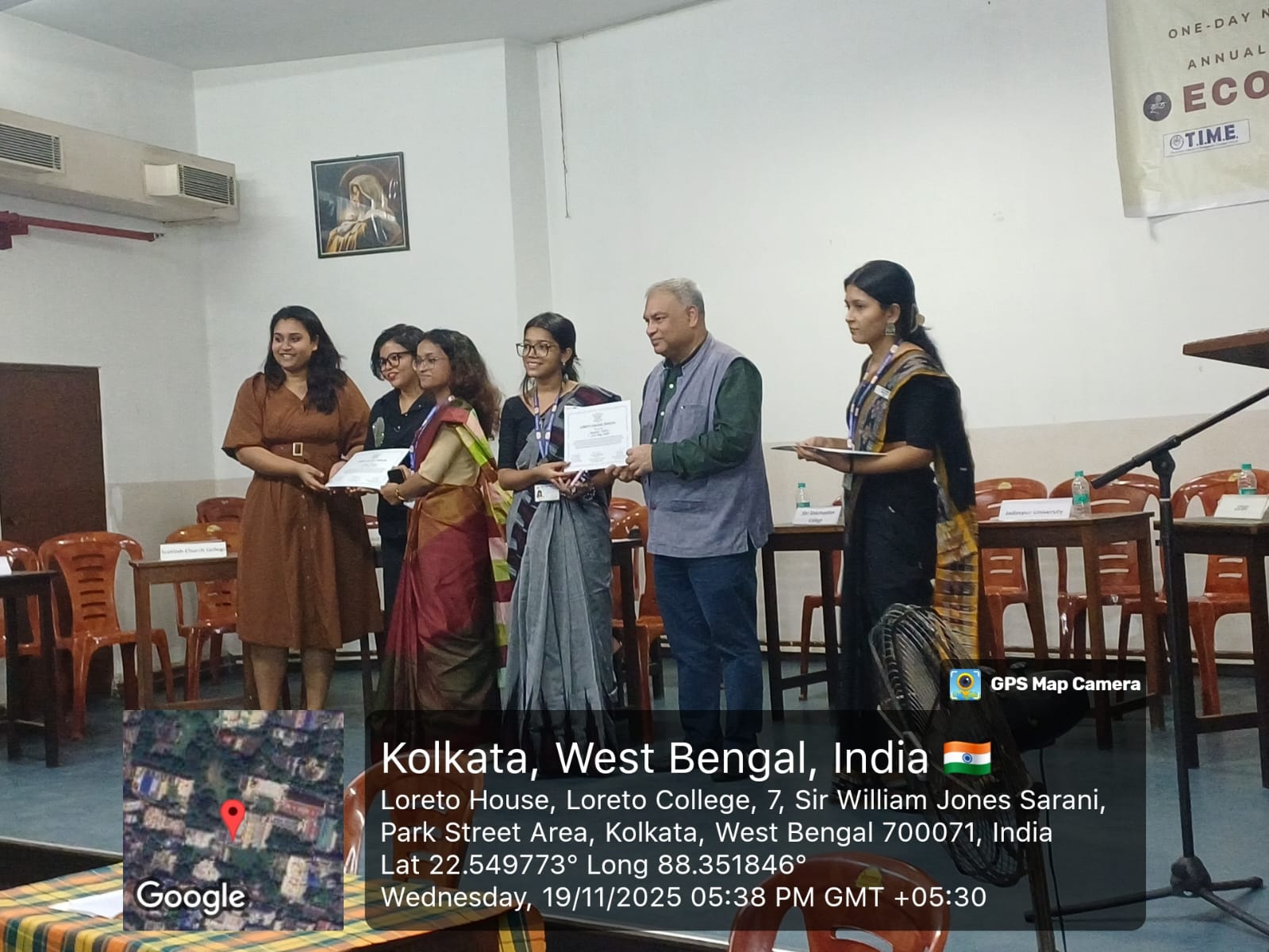
The afternoon transitioned into a dynamic inter-college debate competition on the motion "Big Tech's control over digital intellectual property is inimical to the thriving of start-ups." Held in the auditorium and moderated by Ms. Kanika Khetan, an alumna of the college, the debate saw participation from several premier institutions of the city. The judges, Mr. Pradeep Gooptu and Professor Somrita Ganguly, brought expertise from both the debating circuit and academia. Arguments for the motion claimed that Big Tech's expansive patent portfolios, platform lock-ins, and control over user data stifle the creativity and liberty of emerging start-ups, highlighting issues, such as, app-store commission structures and the controversial use of publicly available data for training AI models. Opposing teams argued that Big Tech's investments in open-source tools, cloud infrastructure, and foundational technologies actually empower start-ups and reduce entry barriers. The debate witnessed compelling rebuttals, referencing contemporary cases such as Epic Games vs. Apple and controversies surrounding AI training datasets. After a spirited exchange, Jadavpur University secured the top position, followed by Loreto College and J.D. Birla Institute.
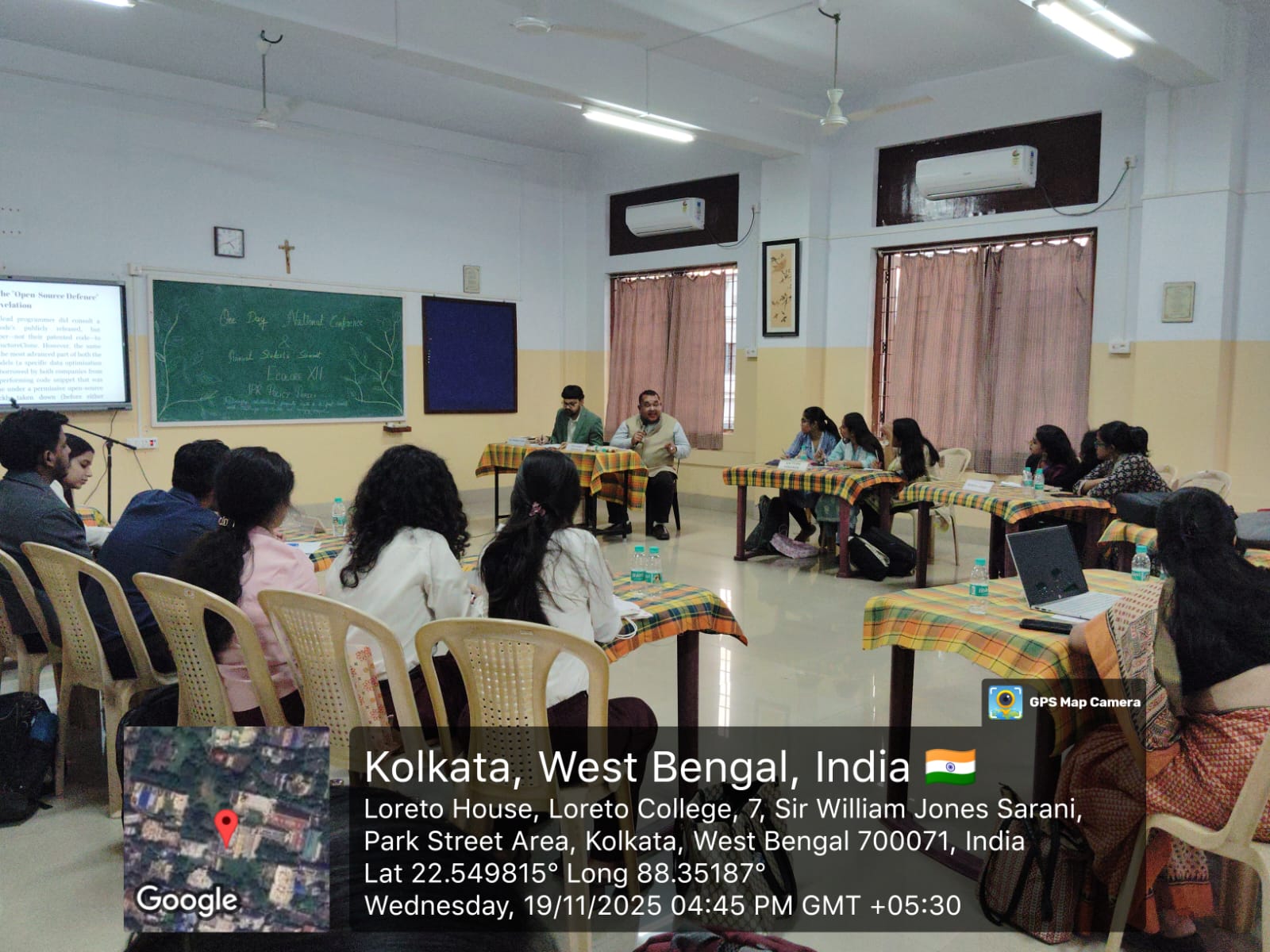
Parallel to the debate competition, was held a intensely brainstorming policy ideation competition, IPR Policy Parley, fostering analytical and policy-writing skills. In presence of distinguished judges Dr. Sitangshu Khatua, Dean of Xavier's Business School Kolkata and Dr. Samprit Chakrabarti, Dean, School of Business, Adamas University, Kolkata, participants worked on a detailed case study requiring them to draft comprehensive policy proposals. The event consisted of two phases: an initial pitch of policy recommendations and a second phase titled "The Open-Source Defence," where teams responded to a scenario twist in real time. Students demonstrated exceptional clarity, strategic thinking, and interdisciplinary understanding as they worked on issues such as innovation incentives, AI regulation, digital privacy, and fair access to intellectual property. Awards were presented across multiple categories, with Loreto College securing Best Team, while students from Amity University and Bethune College stood as runners-up.
Thus, the One Day National Conference and Annual Students' Summit, ECOLORE-XII showcased a meaningful and nuanced ensemble of legal perspectives, economic debates, technological insights, and policy innovation, bringing about a truly holistic academic experience for all the participants. By engaging with themes that lie at the heart of the digital era, the entire programme re-kindled among the young people, the spirit to think critically about how intellectual property laws must evolve to keep pace with rapid technological change.




 ANNOUNCEMENTS