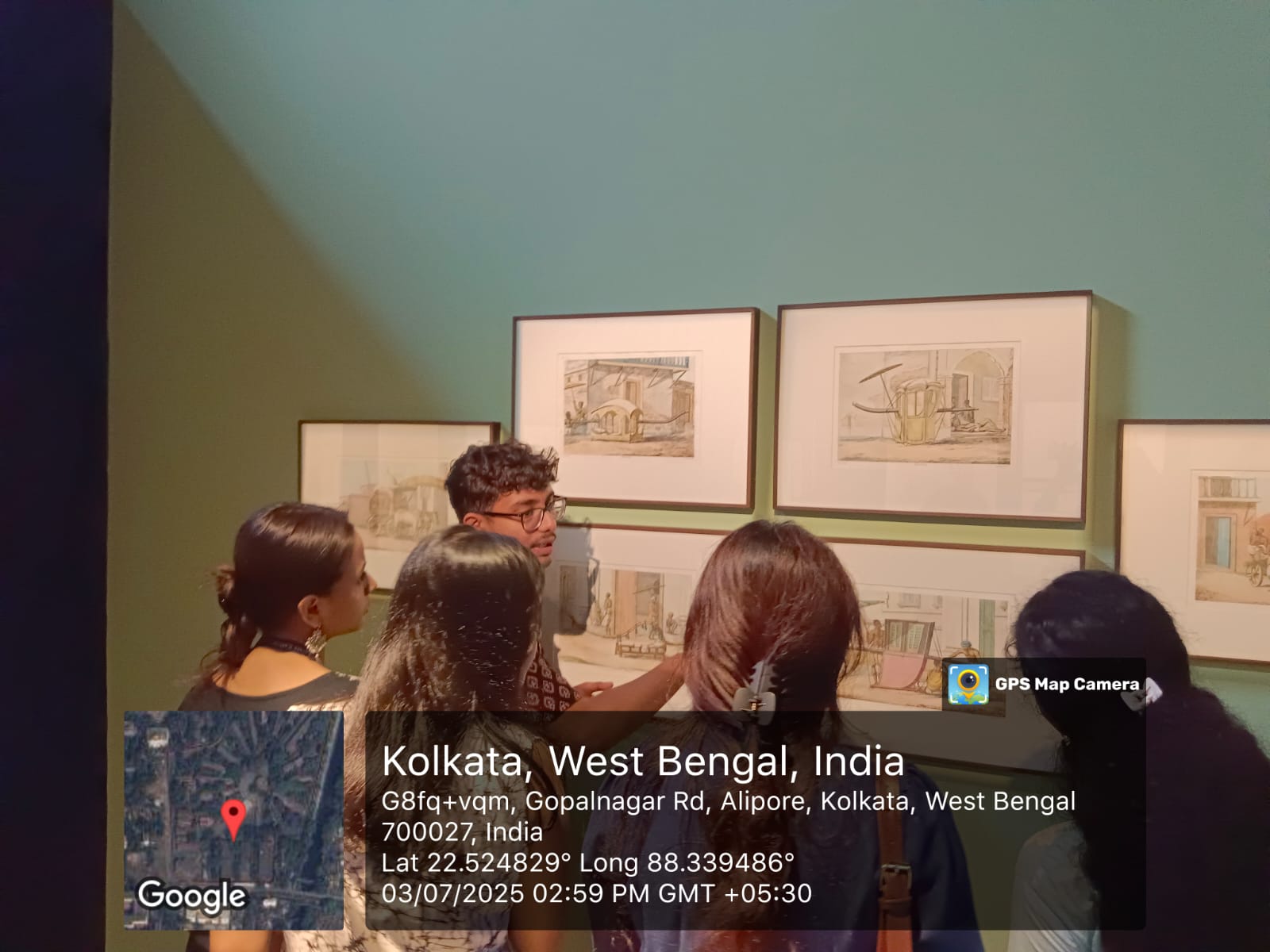
Exhibition of Balthazar Solvyn's Sketches in the Alipore Museum
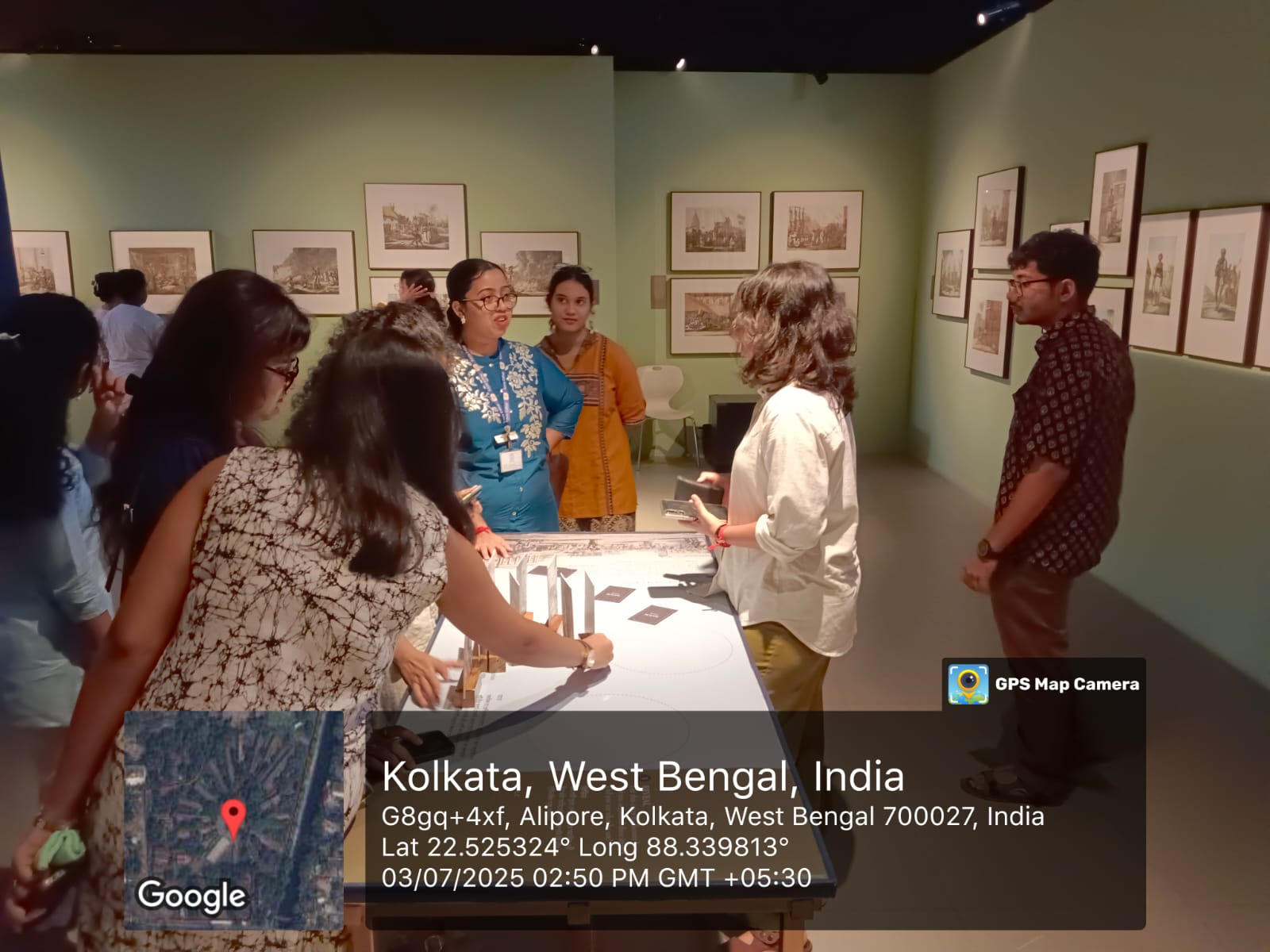
On 3 July 2025, a group of about twenty students from Semester 2, Department of History, visited the Alipore Jail Museum, a heritage structure established in 1906 AD, to explore a rare and insightful exhibition on the works of François Balthazar Solvyns (1760–1824), a Flemish artist who lived in Calcutta from 1791 to 1803. The exhibition, curated within the preserved colonial-era prison complex, brought to life Solvyns' extraordinary collection of etchings that document the daily lives, customs, and occupations of people in late 18th-century Bengal. We were guided through the exhibit by Astik Mukherjee, an enthusiastic apprentice guide, who helped us understand the historical and artistic relevance of Solvyns' works.
Unlike British artists such as Thomas and Daniel Williams, who concentrated on picturesque landscapes and monuments that suited colonial taste, Solvyns turned his attention to the lives of common people-laborers, artisans, traders, and domestic workers. His work is considered the first visual ethnographic survey of Bengal, and it vividly illustrates the caste system, with detailed portrayals of individuals such as a milkman, a gardener, a potter, and other caste-based professionals. Through these, students learned about the social stratification and occupational hierarchy that shaped daily life in 18th-century Indian society.
Solvyns' etchings also include female figures, which was rare for colonial art of that period. His depictions of women, shown performing rituals, working, or participating in domestic scenes, added a gendered dimension to his visual ethnography. Students noted how this inclusion gave a more complete and nuanced image of society. His vivid renditions of Dol Jatra and Snan Jatra revealed how festivals were central to cultural identity, offering us an understanding of religious and communal celebrations through colour, attire, and rituals.
Mr. Astik Mukherjee pointed out a North Indian bias in Solvyns' selections, as many South Indian and regional Eastern customs were underrepresented. However, the presence of figures like the Raja of Krishnanagar and the Raja of Thanjavur showed his attempt to capture the diversity of princely and regional India.
What students learned from this exhibition was not limited to art appreciation-it opened up conversations on colonial representation, the role of visual culture in documenting history, and how art can serve as both aesthetic expression and historical evidence. They also understood how Solvyns' work influenced later Company School paintings, and how he created a prototype of "art as information"-blending ethnography with personal, narrative art.
In summary, this visit helped students explore an unfamiliar but deeply informative chapter of India's colonial past through the lens of a foreign observer who attempted to understand, record, and humanize the people of Bengal with empathy and detail.




 ANNOUNCEMENTS